
Why 3PLs Are Betting Big on Warehouse Growth Again
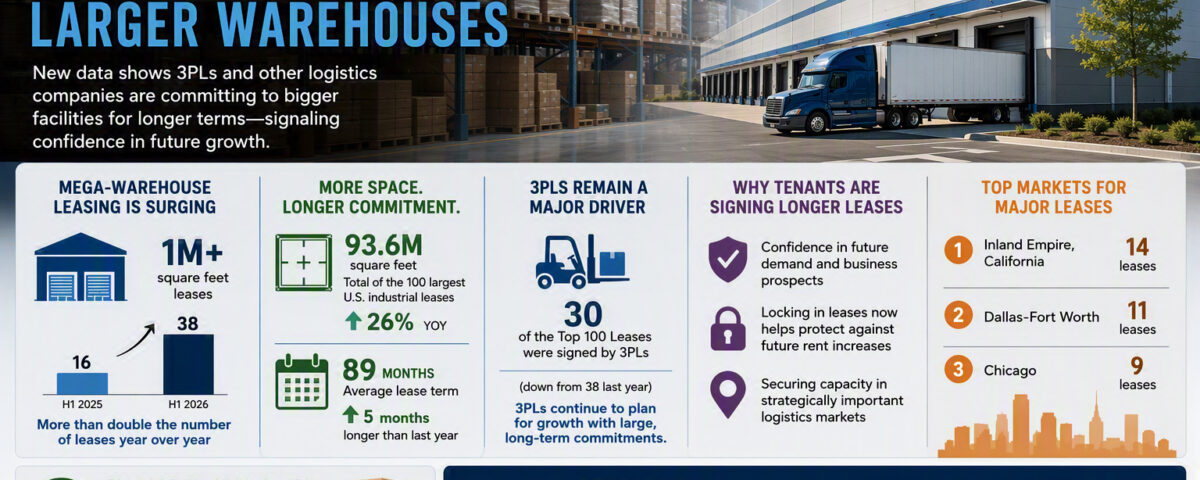
The U.S. industrial real estate market is showing renewed strength, with 3PLs and other logistics companies signing longer leases for larger warehouse facilities, signaling growing confidence in future business conditions.
Major Findings
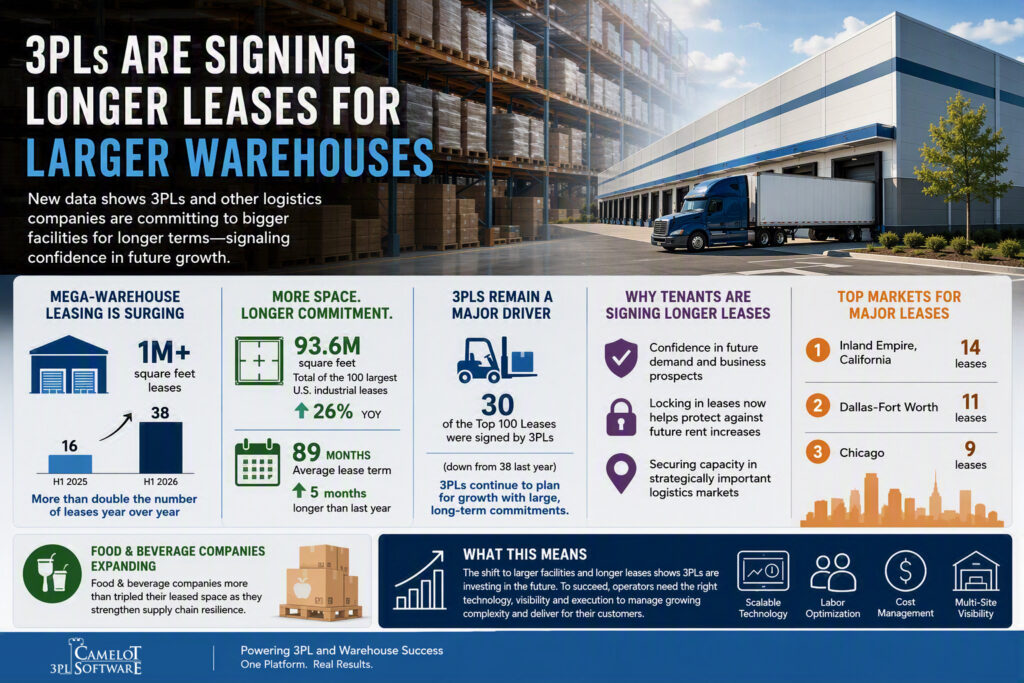
- Mega-warehouse leasing activity is accelerating. Leases for facilities with 1 million+ square feet more than doubled in the first half of 2026, rising from 16 leases a year ago to 38.
- The 100 largest U.S. industrial leases totaled 93.6 million square feet, a 26% year-over-year increase.
- Average lease terms increased to 89 months, about five months longer than the previous year, reflecting greater long-term commitment from tenants.
3PL Industry Impact
- Third-party logistics providers (3PLs) remained the largest occupiers of massive warehouse facilities, holding 30 of the top 100 leases, although their share declined from 38 the prior year.
- The trend suggests that many 3PLs are planning for continued growth and are willing to commit capital to larger, long-term distribution operations.
Market Drivers
According to CBRE, companies are signing longer leases because:
- They have increased confidence in future demand and business prospects.
- Locking in leases now helps protect against future rent increases.
- Companies want to secure capacity in strategically important logistics markets.
Leading Markets
The strongest leasing activity occurred in:
- Inland Empire, California – 14 major leases
- Dallas-Fort Worth – 11 major leases
- Chicago – 9 major leases
Notable Industry Trends
- Food and beverage companies significantly expanded their warehouse footprint, more than tripling leased space as they strengthen supply chain resilience.
- Traditional retailers and wholesalers accounted for fewer large leases than in 2025, indicating a shift in who is driving warehouse demand.
What This Means for Camelot Customers
For 3PL operators and warehouse companies, the article is another indicator that the market is moving from caution to growth mode. Larger warehouse commitments suggest that logistics providers are preparing for increased volume, regional distribution expansion, and longer-term customer contracts. This trend also reinforces the importance of scalable WMS platforms, labor optimization, cost management, and multi-site operational visibility as facilities become larger and more complex.
Source: freightwaves.com